Amid the 7.9 billion–person global market, Japan remains one of the world's most attractive and high-potential destinations.
I have visited more than 40 countries and spent six years studying and working in Germany. Whenever I am asked, "Which country did you like the most?" I always answer without hesitation: Japan. Every country has its own charm, but Japan has something uniquely compelling—something you only truly understand once you have lived abroad.
Yet this highly attractive market also carries its own complexities.
Despite being one of the world's leading economies, Japan presents significant entry barriers for global companies due to:
- Highly intricate business customs
- Exceptionally high expectations for quality and reliability
- Unique and often opaque decision-making processes
- Limited transparency and access to information
- Strong, long-established domestic players
As a result, many companies recognize Japan's potential but struggle with the question: "How do we actually enter this market?"
At the same time, Japanese companies face their own set of structural challenges:
- A rapidly declining population
- Aging leadership and increasing succession issues
- A shrinking domestic market
- Technology and talent becoming increasingly inward-looking
These factors have accelerated demand for external technologies and new business models. Consequently, major corporations are strengthening their open innovation initiatives and even establishing specialized units dedicated to collaboration with global partners.
In other words,
"Global technologies & business models" × "Japan's market needs"
This intersection represents one of the most powerful opportunities for future innovation.
However, the bridge that should connect these two sides is overwhelmingly lacking.
Global companies often face:
- A lack of visibility into Japan's market structure
- Difficulty accessing key decision-makers
- Challenges identifying the right local partners
- Unfamiliar and hard-to-read business practices
- Limited access to Japanese-language information
- Inability to visit Japan frequently enough to build intuition about the market
Meanwhile, Japanese organizations struggle with:
- Limited channels to connect with foreign companies
- Difficulty recognizing which global technologies align with their needs
- Narrow evaluation frameworks for new technologies
- Cultural and linguistic barriers to collaboration
🌐 REM was founded to close this gap.
With experience supporting Japanese companies in their global expansion—and with the international networks built across numerous countries—we founded REM to help global innovators establish real traction in Japan.
Our mission is to enable international companies to build a solid business foundation in Japan, succeed in the market, and expand their impact across Asia and beyond.
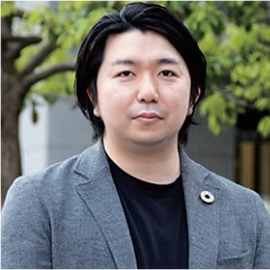
This is why I founded REM in 2020, in the midst of the COVID-19 pandemic.
🗾 Our Vision
Japan's growth has limits if pursued only within the framework of ALL JAPAN. But through the lens of With The World, Japan has enormous untapped potential.
This is why we believe:
Global innovation × Japan-based business development = Innovation with worldwide impact
Through this architecture, we aim to create a future where both global and Japanese companies grow outward from Japan to the world.
And ultimately,
to help usher in a new era of prosperity for Japanese industry.
REM walks alongside our partners to create this future—together.